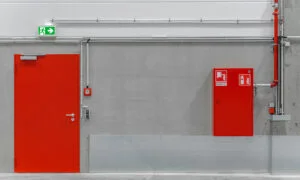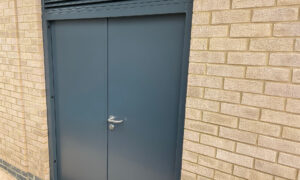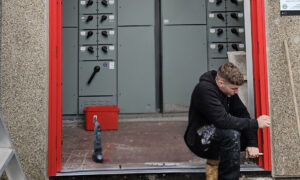
Fire doors play a vital role in protecting people, property and escape routes during a fire. But knowing when and where fire doors are required isn’t always straightforward. Requirements vary depending on the type of building, how it’s used and the level of risk involved.
Whether you’re a business owner, landlord, facilities manager or homeowner, understanding fire door requirements is essential for safety and legal compliance.
In this guide, we explain where fire doors are needed, how regulations apply to different settings and what to do if you’re unsure of your responsibilities.
Key takeaways
- Fire doors are required in most commercial, public and multi-occupancy residential buildings.
- They’re essential for protecting escape routes and slowing the spread of fire and smoke.
- Fire door requirements depend on building layout, use and fire risk assessment.
- Regular checks and professional installation are critical for compliance.
Where are fire doors required?
In the UK, fire-resistant doors are required when building regulations or fire safety legislation identify a need to protect escape routes, compartmentalise fire risk or slow the spread of fire and smoke.
When working out where fire doors are required and whether your fire doors meet legislation, the following documents will come in useful:
- The Regulatory Reform (Fire Safety) Order 2005
- Fire Safety (England) Regulations 2022
- Building regulations Approved Document B
- Your own fire risk assessment
The guidance we’ve put together below applies to most buildings. But every building is different. You need to understand legislation thoroughly or work with a fire safety expert to confirm exactly where fire doors are required in your business or residential building.
Where do you need fire doors in commercial and public buildings?
In commercial and public buildings, fire doors are almost always a legal requirement. Fire doors are typically required:
- On corridors and stairwells that form an escape route
- Between different fire compartments
- In high-risk areas such as kitchens, plant rooms and server rooms
In open plan areas, where fire doors aren’t suitable, fire curtains are sometimes an alternative.
Fire doors ensure people can evacuate safely and that fire doesn’t spread rapidly through your building.
Where are fire doors required in residential buildings?
Fire door requirements aren’t limited to businesses. Many residential buildings also need fire doors.
In flats and houses in multiple occupation (HMOs)
In blocks of flats and HMOs, fire doors are required between any habitable area and a corridor or stairway. Flats that are 4.5 metres or more above ground level must also have fire doors fitted between habitable rooms.
In domestic buildings, three storeys or over
In single-family homes, fire doors are not always required. However, for new builds and home renovations in buildings with three or more storeys, fire doors are required for every habitable room that leads from a stairwell.
This applies to loft conversions where an extra floor has been added to a two-storey home.
In domestic buildings with an integral garage
If your property has an integral garage, any door that leads directly from the garage into the home has to be fire rated, too.
What happens if fire doors are missing or non-compliant?
Missing or non-compliant fire doors are a serious issue. If fire doors aren’t installed where required, or if they’re poorly maintained, consequences can include:
- Increased risk to life in a fire
- Rapid spread of fire and smoke
- Failure to meet legal fire door requirements
- Enforcement action or fines
- Invalidated insurance
Remember: even a certified fire door will fail to perform to standards if it’s damaged or poorly fitted. Regular fire door maintenance is essential.
How to check if your building needs fire doors
If you’re at all unsure where you need fire doors, the best starting point is a fire risk assessment. And — if you don’t feel confident running a fire risk assessment yourself — you can call in the experts.
A competent assessor will consider:
- Building layout and size
- Occupancy levels
- Use of different areas
- Existing fire safety measures
With in-depth knowledge of UK fire safety regulations and after a thorough inspection of your site, they’ll recommend a safe and compliant fire door solution.
This is a service we provide here at Fire Door Systems. As part of a fire safety consultation, one of our accredited technicians will visit your property to assess your fire door requirements.
They’ll also audit your safety signage, emergency evacuation procedures, alarm systems and emergency lighting.
Contact us to book a Fire Safety Survey for your home or business.
How to check if your building has fire doors
It can be hard to tell a regular door from a fire door.
Fire doors are available in a range of styles and finishes. You can get steel fire doors, timber fire doors, fire doors with glazing — and fire doors that are painted, too.
But when checking if your building has fire doors, there are a few tell-tale signs to look out for.
Fire doors have features that regular doors don’t. They should have fire door signage, self-closing devices and intumescent seals.
Another essential sign you need to look out for is a fire door certification label. This is usually located on the edge of the door, sometimes on top. It features details of the door specification, its FD rating and the company that certified it.
Get expert advice on fire door requirements with Fire Door Systems
Understanding fire door requirements can be complex. But you don’t have to figure it out alone.
At Fire Door System, we help businesses, landlords and homeowners understand where fire doors are required. We also supply fire-rated solutions and ensure they’re installed and maintained correctly.
From surveys and advice to manufacture, installation and ongoing maintenance, we provide end-to-end fire door support.
Want total peace of mind? Contact our team to arrange a fire door consultation today.
Where are fire doors needed?: FAQS
Where are fire doors required?
Fire doors are required in most commercial and public buildings. They’re also required in blocks of flats and higher-risk residential properties.
Where do you need fire doors in a house?
You may need fire doors in your home if it has more than two storeys, a loft conversion or an integral garage.
Do you need a fire door on a bathroom?
Not usually. You only need a fire door on a bathroom if the bathroom opens onto a protected escape route and a fire risk assessment specifies it.
Do you need internal fire doors in flats?
Yes, you need internal fire doors in flats that are 4.5 metres or more above ground level. You also need fire-rated doors between any habitable area and a corridor or stairwell, regardless of height.